When the first Vienna Cemetery by the Baptist Church became full, a new one was laid off in a geometrical pattern in the northern part of the city. Located on what is now Woodward Street, this still serves as the City Cemetery today.
The oldest section is on the north side of Woodward Street, but over the years it has flowed over to the south side as well. The City of Vienna recently purchased additional adjoining acreage for expansion.
It is here that many of Vienna’s best stories wrote their final chapters. Some of those stories are well known and some are little read, but all played a part in making our city the special place that it is today.
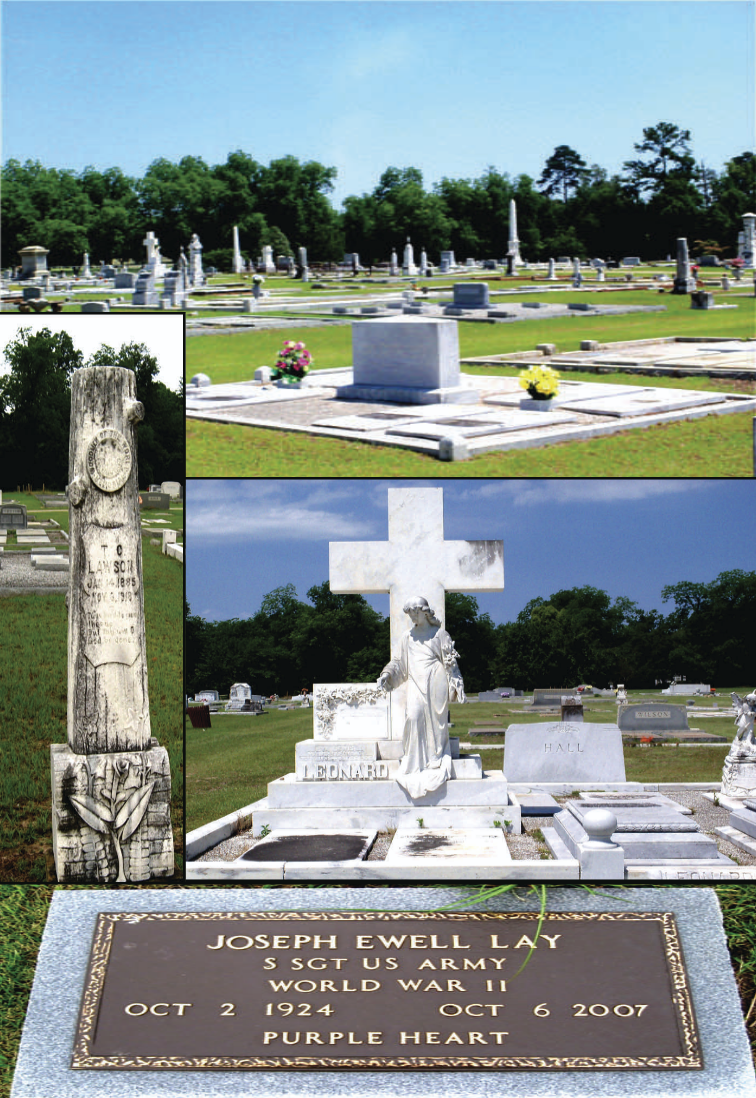
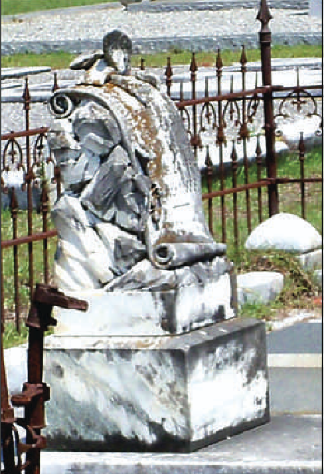
When visiting a cemetery you usually try to imagine what that person’s life might have been like and the role they played in shaping and influencing the place they lived. Sometimes there are clues in the form of emblems, markers, and epitaphs that give us insight into a person’s former life. These are some of the symbols and their meanings you will see while exploring the Vienna City Cemetery.
Angel—Messenger of God, spirituality
Arch—Passage to heaven
Book—Faith and wisdom
Obelisk—Eternal life
Calla Lilly—Majestic beauty
Cherub—Divine wisdom or justice
Column—Noble life
Cross—Faith
Crown—Reward and glory
Dove—Holy Spirit, purity, peace
Ivy—Friendship
Lamb—Innocence
Praying Hands—Pious devotion
Scroll—Life, time, and the scriptures
Sleeping Child—Death of a child
Square & Compass—Masonic symbol for faith and reason
Sword—A military career
Swords crossed—Life lost in battle
Tree Trunk—Beauty or brevity of life
Urn—Old age, mourning if draped
Vienna’s Notable Citizens
1. Walter F. George (North Section)
A lawyer by trade, George was elected to the U.S. Senate in 1922, launching a powerful political career that lasted more than thirty-four years. President Lyndon Johnson said, "Walter George's name has become a household word in every dwelling in our land and across the seas and the oceans. In far away countries and in places which are alien and strange, Walter George is a magic figure, who symbolizes all that is best and noble in the United States." Still his legacy lives on. The Walter F. George School of Law of Mercer University, the Walter F. George High School in Atlanta, and George Lake in western Georgia are named for him.
2. The DeLiesselines (South Section)
Ethel McDonald DeLiesseline authored two books of poetry, One Small Candle and My Dear Mother. In the 1960s she won two statewide contests sponsored by the Atlanta Penwomen’s Club. She was also an accomplished musician who during WWII used her creative capacity by aiding soldiers therapeutically through poetry, music and philosophy. Mrs. DeLiesseline taught Vienna’s first organized kindergarten classes as well as many piano, violin, and voice students.
J. T. DeLiesseline served as the mayor of the City of Vienna for 7 years.
3. Dr. Napoleon Williams (Southeast Section)
Dr. Williams’ gravesite is easily recognized by the beautiful cross marking the family plot. A leader among leaders, he was dedicated to the service of his country, his community and children. He served as a principal in Vienna Schools for 25 years. Upon retiring, he was known and respected as one of the most influential administrators in the state of Georgia. He served on the Vienna City Council for 29 years.
4. Sayra Ambrose (South Section)
Buried in the south section of the Vienna City Cemetery, Sayra Ambrose was the first female elected official in the City of Vienna. She served on the Vienna City Council for 25 years. She was very active in the Garden Club on both a local and state level. She also is noted as a founder of the Houston Baptist Association Camp and directed it for many years. She died at the age of 93.
5. Eugene H. Methvin (North Section)
A self described “shoe leather reporter” and senior editor of Reader’s Digest, Eugene Methvin was known for his articles on topics such as organized crime and Russian politics. When asked how he would like to be remembered, Methvin replied, “I consider myself fortunate to have been allowed to play the piccolo in the great parade of American democracy for nearly half a century. During that time the American people defeated and brought down 2 evil empires: the Teamsters Union and the Soviet Union, and I and my piccolo had a hand in both. That is enough for me.”
6. Stanley Gambrell (South Section)
Stanley Gambrell aka Mr. Pig Jig served the City of Vienna as City Administrator for many years. He was also the founder of Vienna’s Big Pig Jig®, an annual bareque cooking competition that has an ongoing history of 30 years and put Vienna on the map. BPJ is the southeast’s largest and Georgia’s oldest and official barbecue cooking contest. A quote that is befitting this citizen is, “The true measure of a man’s life is not what he accumulates but instead what he gives.” Gambrell gave more than we will ever know to his community.
7. Emily Barnelia Woodward
Affectionately known as “Miss Em” to those who knew her well, Emily Barnhart Woodward was the first woman ever to hold the position of president of the Georgia Press Association. In 1928 she founded the Georgia Press Institute which became a valued part of the University of Georgia’s Continuing Education Center. During WWII, Miss Woodward served as a consultant and lecturer for the United States in England and Scotland. In 1946 she served on General Douglas McArthur’s advisory group on education to Japan. She also authored two books.
8. (North Section)
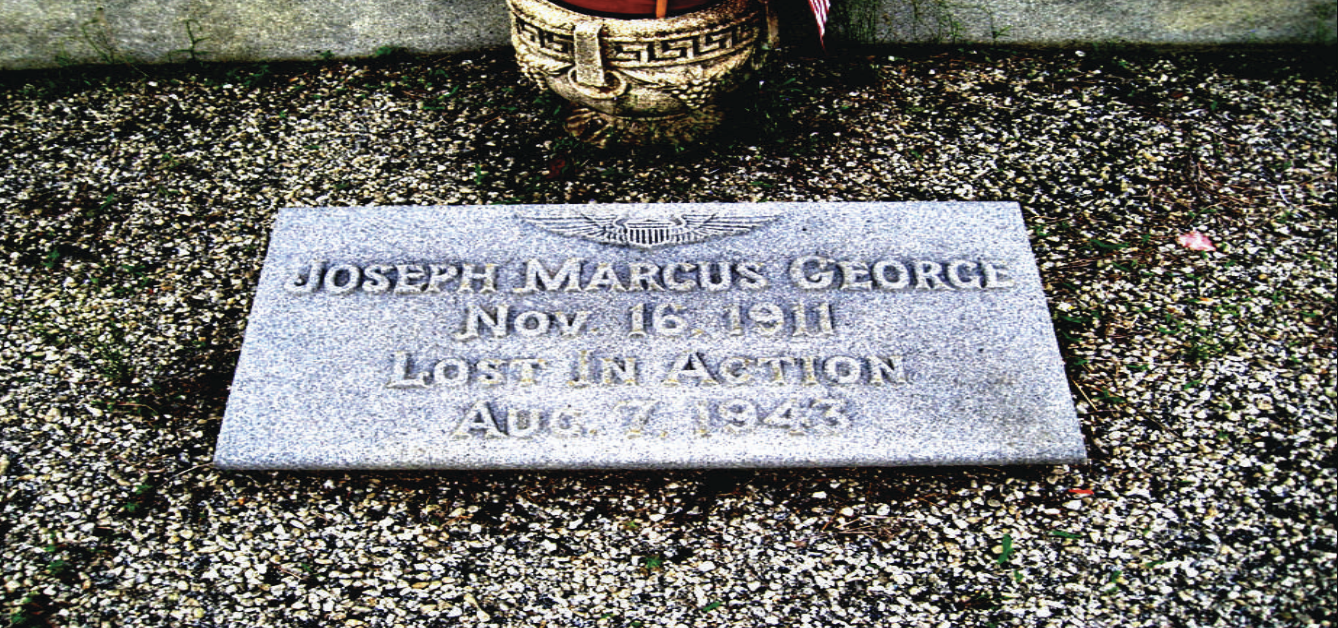
Son of Senator Walter F. George was lost during WWII on August 7, 1943 in a plane over New York Harbor while trying to destroy a German submarine which reportedly was believed lying in wait for US planes. His "buddy" had gone out and had not returned. George went in search and did not return.
Other Cemeteries in Vienna
Vienna First Baptist Church Cemetery, Church Street